
AI vs Human Content Creation The Ultimate Guide to 2026

Noah Morris
Co-Founder
AI Vs Human Content Creation: The Complete Guide To Video Production In 2026
Most creators don’t struggle because they lack ideas. They struggle because they underestimate the real value of AI video creation tools. They try to do everything manually: scripting, editing, thumbnails, captions, and after a few weeks, they burn out. Posting consistently starts to feel impossible. What could’ve been a simple system turns into long nights, missed uploads, and never ending stress. The truth is, ignoring the power of AI today is like choosing to work twice as hard for the same result.
The real solution isn’t replacing yourself with software. It’s building what’s called a hybrid AI human workflow. That means letting AI handle the repetitive, time-consuming parts while you focus on creativity, strategy, and storytelling. When you combine speed with human perspective, content creation becomes sustainable, and that’s when you actually build a real business.
AI Vs Human Video Creators - Fundamental Differences
AI and humans make videos in totally different ways. AI follows instructions and patterns. You give it a script, and it puts things together based on what it has seen before. It’s fast, doesn’t get tired, and can pump out a lot of content quickly. But it doesn’t actually care about the message. It just predicts what should come next.
Humans create from real life. When someone talks about a struggle, a win, or a lesson they learned, you can feel it whether through the camera or the voiceover. A person can read the room, switch their tone, and say things in a way that hits harder. Humans might take longer and make mistakes, but they bring personality. And personality is what people connect with.
What Is AI Video Creation?
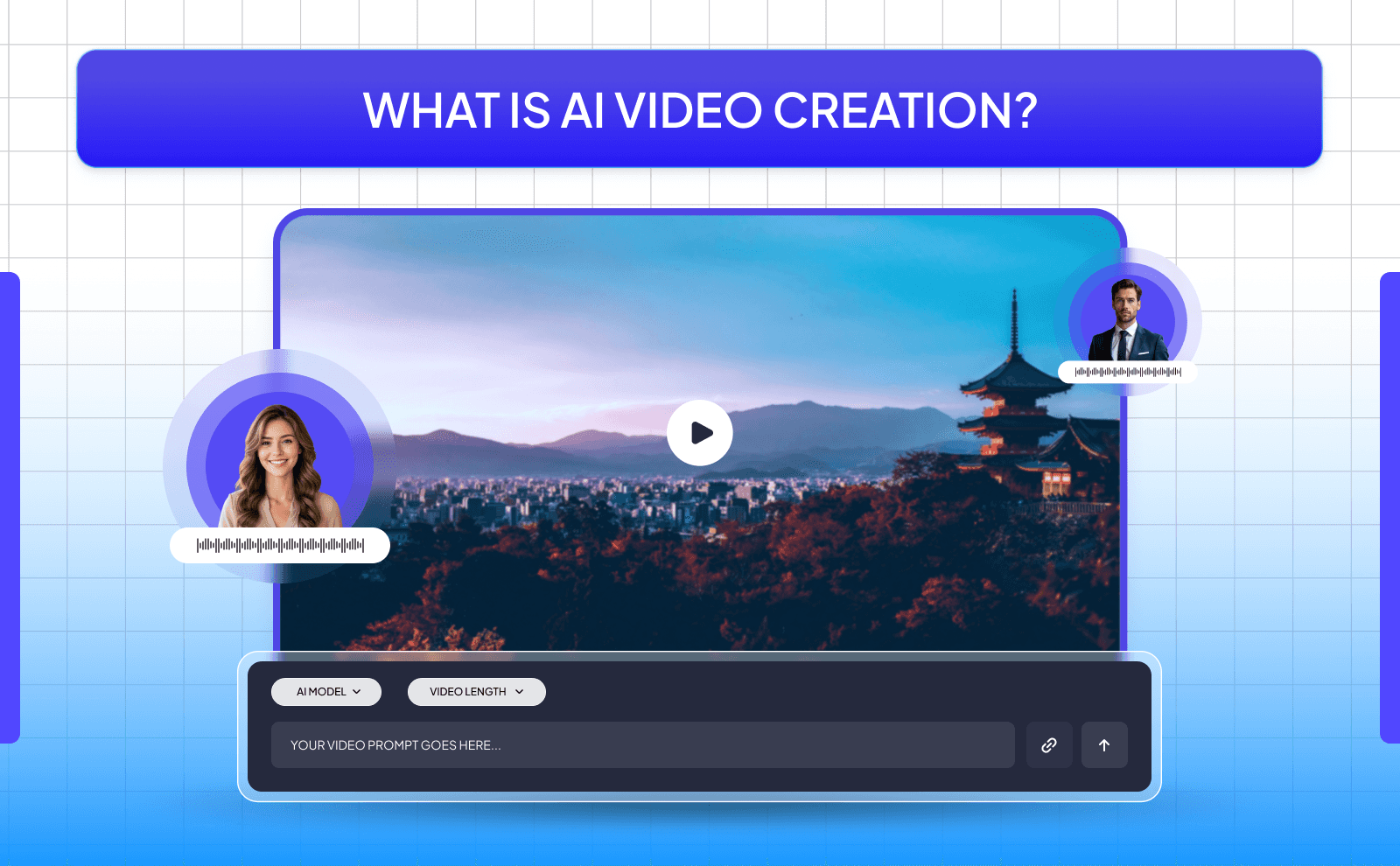
AI video creation is basically using AI video generation tools to make videos for you. You type in a script, and it can add a voice, visuals, subtitles, even background music. Some tools can turn a simple idea into a full video without you filming anything. That’s why it’s popular for faceless YouTube channels and short-form content.
Instead of spending hours editing, cutting clips, and fixing audio, the tool does most of it. You’re still in control of the idea, but the hard technical work is handled for you. It makes video creation way easier for beginners because you don’t need expensive gear or years of editing skills to get started.
What Makes Human Video Creation Unique?
When a human makes a video, there’s real emotion behind it. If someone is excited, nervous, frustrated, or proud, you can see it in their face and hear it in their voice. That kind of energy is hard to fake. Viewers stick around because they feel like they’re watching a real person, not just content.
Humans are also better at being creative in unexpected ways. They can tell stories that don’t follow a perfect storyline but still sound interesting. They can joke, pause at the right moment, or react naturally. That raw, imperfect side is actually what makes content interesting. Sometimes the little flaws are what make it feel real.
The Current State Of AI In Video Production
Right now, AI is really good at speeding things up. It can help with ideas, write scripts, edit footage, and even suggest titles or thumbnails. For someone running a channel alone, that’s a huge advantage. What used to take days can now take hours.
But it’s not perfect. Sometimes it sounds repetitive or a bit “off.” It doesn’t always understand deeper emotions or culture the way a person does. That’s why a lot of smart creators mix both. They let AI handle the boring parts and keep the storytelling human. That combo is the best.
The Pros And Cons Of AI Video Editing: What Every Creator Should Know
AI video editing can save you a crazy amount of time. It can cut silence, add subtitles, sync music, and even choose clips for you. If you’re making content every week, that speed really helps. You don’t have to sit for hours on a timeline moving tiny clips around. It takes care of the boring, repetitive stuff.
But it’s not perfect. Sometimes the cuts feel a bit awkward, or the pacing feels off. It doesn’t always understand humor, emotion, or dramatic timing. You might still need to jump in and fix things yourself. So it’s advanced, but it’s not a full replacement for human judgment.
Speed And Efficiency: AI’s Greatest Strength
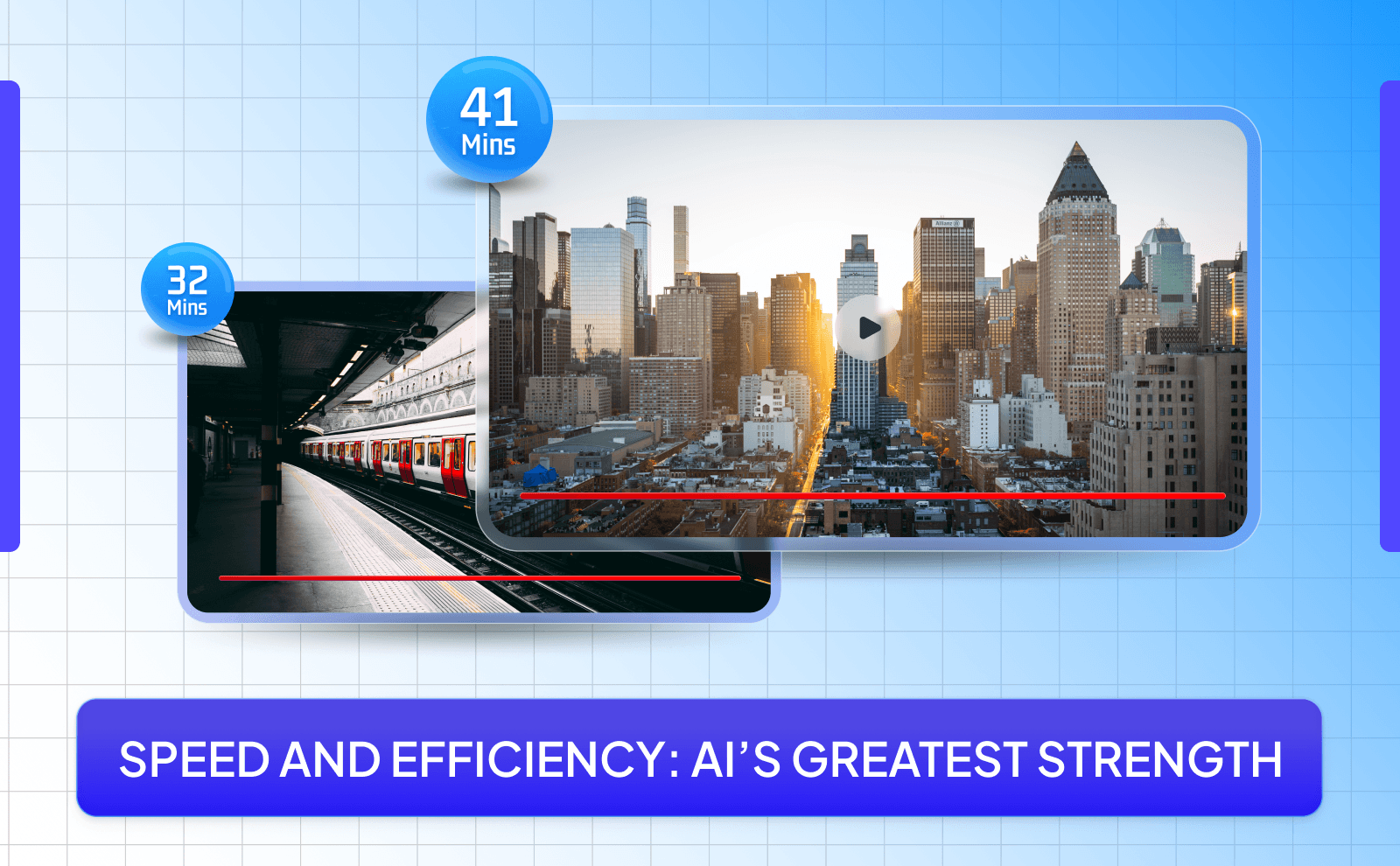
Speed is where AI really performs. What used to take a full day of editing can now be done in less than an hour. You can upload footage and let the tool trim it, add captions, and format it for different platforms. If you’re posting on YouTube, TikTok, and Instagram, that matters a lot.
It also helps you stay consistent. Instead of burning out after editing one long video, you can focus on ideas and scaling. AI handles the heavy lifting in the background. For small creators trying to grow fast, this kind of speed gives you a real advantage over other competitors that are not using AI video creation tools.
Cost Effectiveness And Scalability In AI Video Production
Hiring editors, scriptwriters, and designers can get expensive quickly. AI tools usually cost a monthly fee that’s way cheaper than building a full team. For solo creators or small businesses, that makes a big difference. You can produce more content without your costs exploding.
It also makes scaling easier. If you want to go from one video a week to five, AI doesn’t complain or need overtime pay. It can handle more volume without slowing down. That’s huge if your goal is to grow fast and stay profitable.
The Creative Limitations Of AI Video Tools
AI is great at following patterns, but it struggles with originality. It often sticks to safe formats and popular styles. That means your content can start to look like everyone else’s. If you’re not careful, your videos might feel a bit generic, so you have to do it the right & smart way.
It also doesn’t fully understand emotion. It can add dramatic music and sound effects, but it doesn’t truly know why a moment is emotional yet. Real storytelling needs deeper thinking and real experience. That’s where humans still have the upper hand. Atleast for now.
Human Video Creators: Irreplaceable Elements Of Professional Production
No matter how advanced AI gets, humans bring something special. A good creator knows how to read their audience and adjust on the fly. They can sense when something feels off and fix it creatively. That instinct is built from real experience, not just data.
Professional production also needs leadership. Someone has to decide the message, the tone, and the bigger vision. AI can assist, but it doesn’t lead. Humans still guide the direction and make the final calls.
Emotional Intelligence And Storytelling Mastery
Great videos make people feel something. That comes from emotional intelligence. A human creator knows when to slow down, when to pause, and when to hit a strong line. They understand how real people think and react.
Storytelling is more than just putting clips together. It’s about building tension, creating curiosity, and delivering a payoff. Humans can connect small details into a bigger meaning. That depth is hard to copy with automation alone.
Cultural Sensitivity And Authentic Brand Voice
Every audience is different. What works in one culture might not work in another. Humans understand trends, slang, humor, and social boundaries better. They know when something might come across the wrong way.
Brand voice is also personal. It’s how you talk, joke, explain things, and share opinions. AI can copy a tone, but it doesn’t live it. Real authenticity comes from someone who truly understands the brand and the audience behind it.
Creative Vision And Artistic Direction
Creative vision is about seeing the bigger picture. It’s deciding how a series should feel, what style fits your message, and how everything connects. That kind of thinking comes from imagination and taste. It’s not just about following steps.
Artistic direction also involves risk. Sometimes the best ideas don’t follow trends. Humans are willing to experiment and try something new. AI usually sticks to what has already worked before.
VidRush Is The Best AI Video Production Tool In 2026
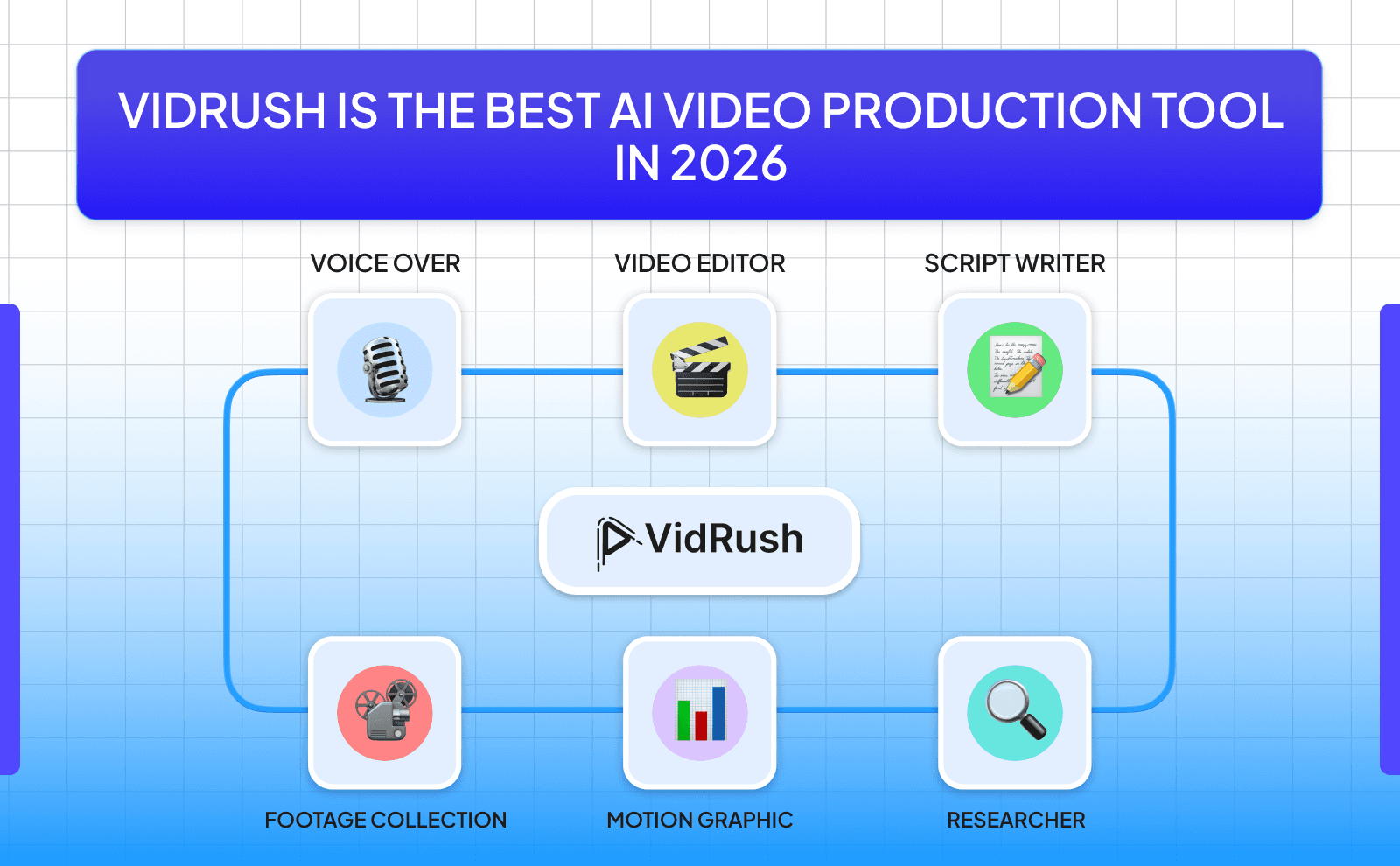
In 2026, tools like VidRush are changing how creators work. Instead of using five different apps, everything can be done in one single place. From script to finished video, the process feels faster and more organized. That simplicity saves both time and mental energy.
For creators who want to grow fast without building a huge team, this kind of tool makes sense. It removes a lot of the technical stress. You can focus more on ideas and strategy instead of getting stuck in editing details.
How VidRush Excels In Video Production
What makes VidRush stand out in 2026 is how simple the whole process feels. You don’t need five tabs open, a separate script writer, a voice tool, and an editor. Everything happens in one place. You start with a simple prompt. just type your idea like you’re explaining it to a friend. Then you choose the type of video you want, the length, and the style.
After that, the tool basically takes over. It writes the script, generates the voiceover, picks visuals, edits everything together, and even creates a thumbnail. You can literally close your browser and let it work in the background. When you come back, the full video is ready. That kind of hands-off production is a huge deal for creators who want speed without having a team.
Video Production Workflow
Step one is to enter your prompt. Just a couple lines explaining what the video is gonna be about. Then select your video format and length. Once you confirm, the system starts building everything automatically behind the scenes.It generates the script first, then turns it into an AI voiceover. Or you can plug in your own script and voiceover.
After that, it matches visuals to the script, edits the clips together, adds subtitles, background music, and formats the video properly. It even creates a thumbnail so you’re not stuck designing one separately. At the end, you just review, make small tweaks if needed, and export. All that and you still have control over the video with a timeline just like any other editing tool.
Will AI Replace Video Creators? The Real Threats And Opportunities
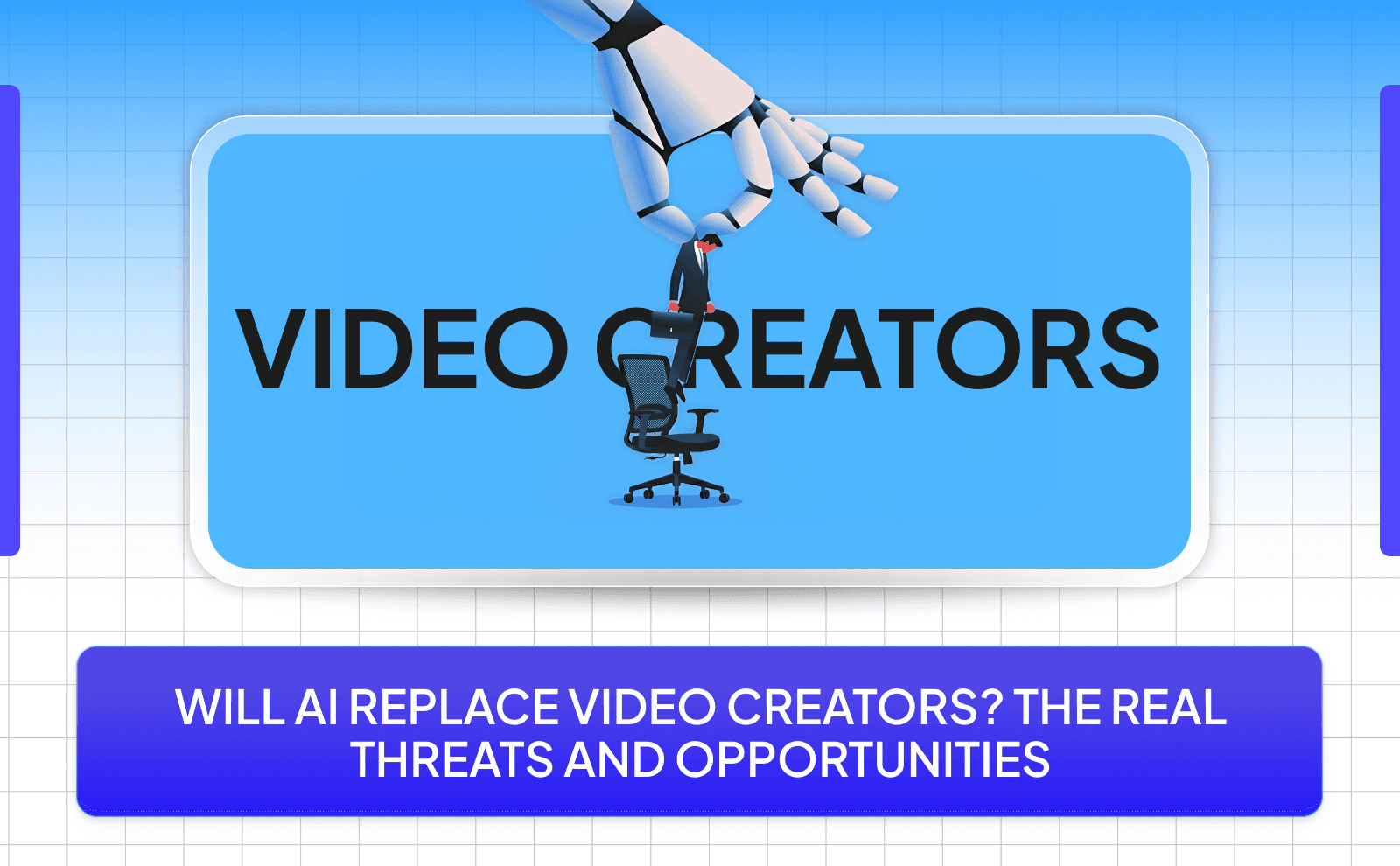
A lot of people are worried that AI is going to take over video creation completely. And yes, it is changing the game. It can write scripts, edit faster than any human, and produce content at a crazy speed. For basic content, that’s a real threat. If someone’s only value was simple editing or basic scripting, AI can now do that cheaper and faster.
But at the same time, it’s also a huge opportunity. Creators who learn how to use AI properly can produce more content, test more ideas, and grow faster than the others. Instead of replacing you, AI can multiply your output. The real threat isn’t AI itself, it’s refusing to adapt while everyone else does.
Tasks AI Can Handle Vs Tasks Requiring Human Touch
AI is great at repetitive and technical tasks. It can trim silence, add subtitles, generate voiceovers, suggest titles, and even analyze what type of content performs well. It doesn’t get tired or bored, and it can repeat the same process perfectly every time. For speed and volume, it’s unbeatable.
But when it comes to deep storytelling, brand identity, and emotional impact, humans still win. A person understands context, humor, culture, and subtle meaning. They can feel when something sounds “off.” AI can assist with structure, but humans give content its soul. That’s the difference.
The Evolution Of The Video Creator’s Role
The role of a video creator is shifting. Before, you had to do everything manually. script, film, edit, design, upload. Now, a lot of those steps can be automated. That means creators are becoming more like directors or strategists instead of just editors.
Instead of spending hours cutting clips, you spend more time thinking about ideas, positioning, and audience psychology. You focus on the big picture. AI handles the execution, while you guide the direction. The creator’s job isn’t disappearing, it’s just evolving.
Why Complete Replacement Is Unlikely
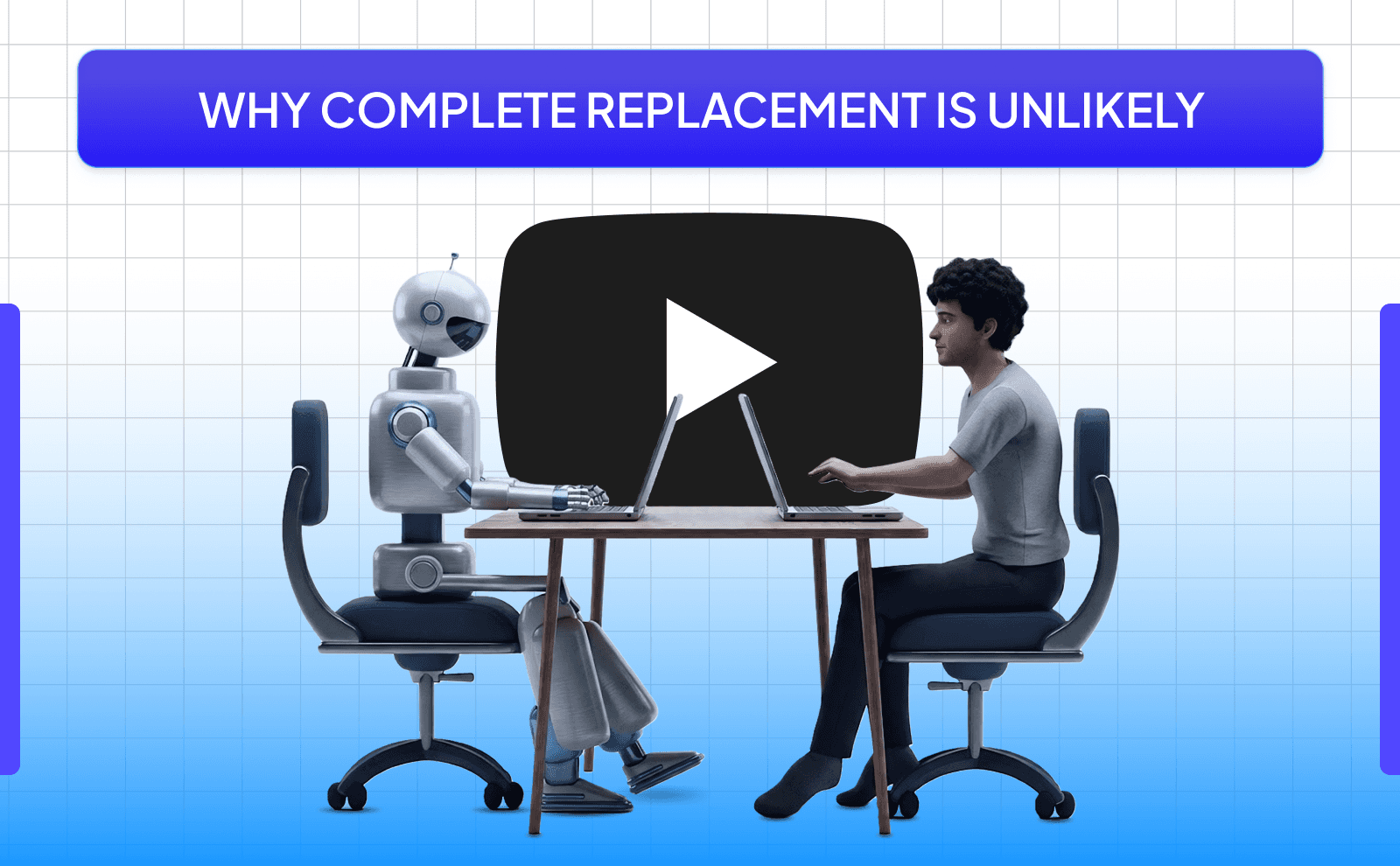
Complete replacement sounds too dramatic, but it’s unlikely. People connect with people. Viewers follow personalities, not just information. Even faceless YouTube channels often build a certain voice and perspective that feels human.
Also, trends constantly change. Humor changes. Culture shifts. AI learns from past data, but humans live in the present moment. That real-time awareness is hard to automate fully. AI will replace certain tasks, not the entire creator.
How To Balance AI And Human Content Creation In Video Production?
The smartest move right now isn’t choosing one side. It’s combining both. Use AI to speed things up, but keep your personal touch in the important parts. Think of AI as your assistant, not your replacement.
If you let AI do 100% of the work, your content might feel generic. If you ignore AI completely, you might fall behind in speed. The balance is where the advantage is. That’s where real growth happens.
Building A Hybrid AI Human Video Workflow
A hybrid workflow is simple. Start with your idea and overall vision. Then use AI to help generate a draft script or structure. Let it handle rough editing, captions, or formatting for different platforms.
After that, step in yourself. Adjust the tone. Rewrite parts to sound more natural. Add personal stories or stronger hooks. This way, AI saves you time, but the final product still feels like you. It’s efficiency without losing personality.
When To Use AI Vs When To Rely On Human Expertise
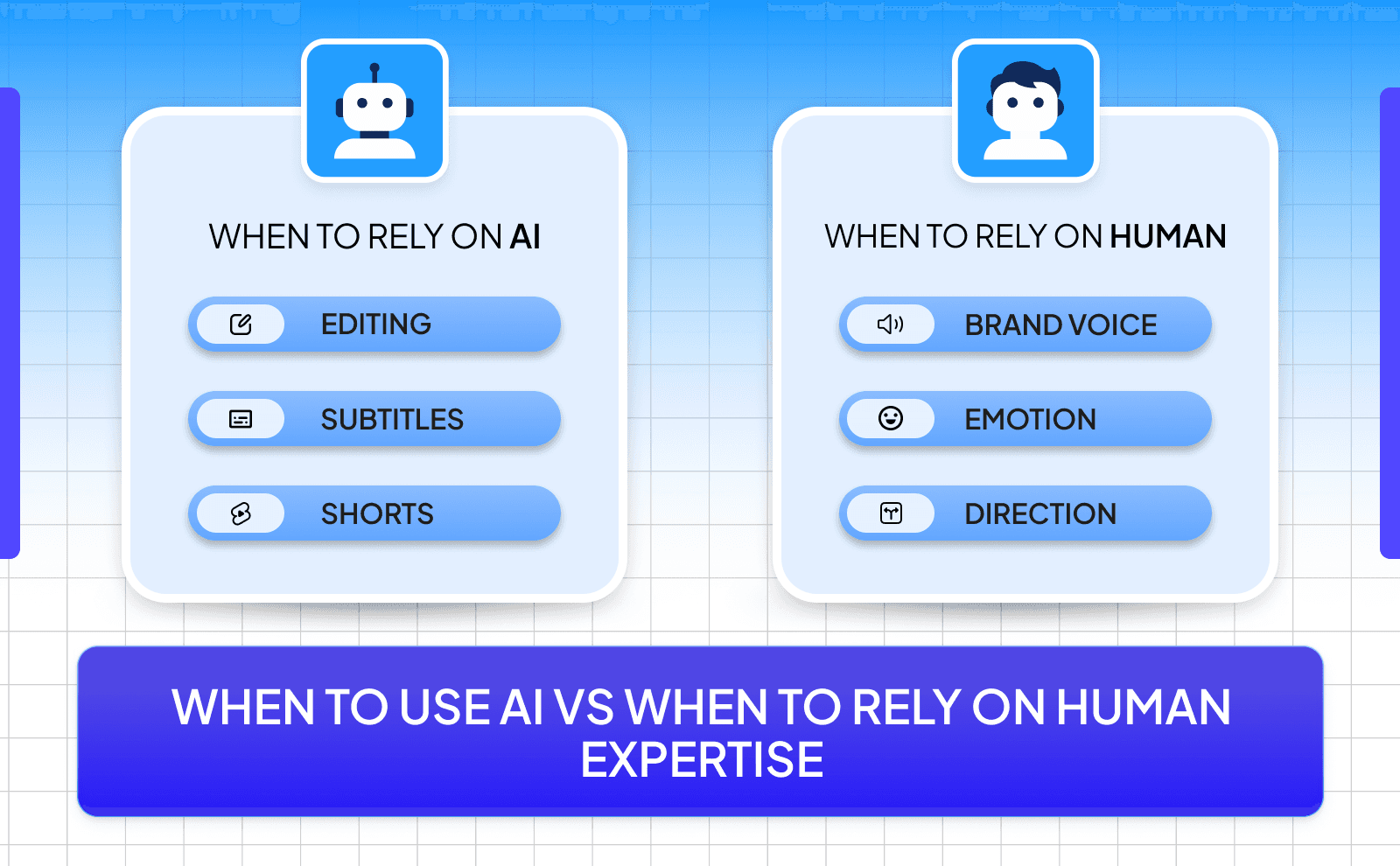
Use AI when speed matters and the task is technical. Editing long podcasts, generating subtitles, repurposing content into shorts, that’s perfect for automation. It handles volume really well.
Rely on human expertise when the stakes are high. Brand messaging, emotional storytelling, sensitive topics, or creative direction should have real human judgment behind them. That’s where experience and instinct matter most.
Scalable Video Production Using Combined Strengths
When you combine AI speed with human creativity, scaling becomes realistic. You can produce more videos without burning out. AI handles production volume while you focus on improving quality and strategy.
This also makes testing easier. You can try different formats, titles, or angles quickly. Then you use human thinking to analyze what worked and why. That feedback loop helps you grow faster than relying on just one approach.
The Future Of Human Vs AI In Video Production
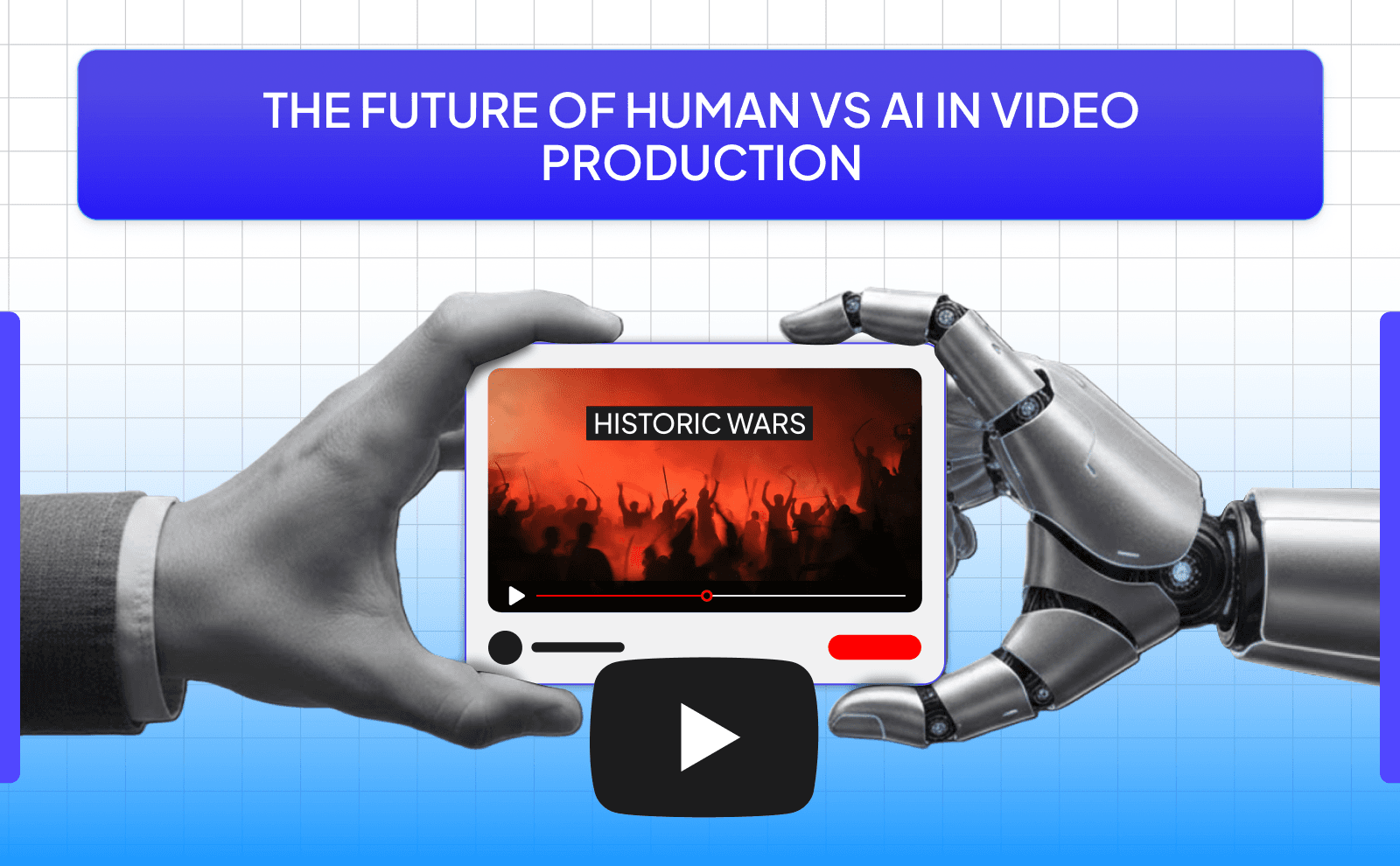
The future isn’t humans vs AI. It’s humans with AI. Tools will keep getting better, faster, and more realistic. Video production will become easier for beginners and more efficient for professionals.
But the demand for originality and personality won’t disappear. As AI-generated content increases, authentic human voices might actually stand out more. The value of real perspective could go up, not down.
Emerging Trends In AI Video Creation
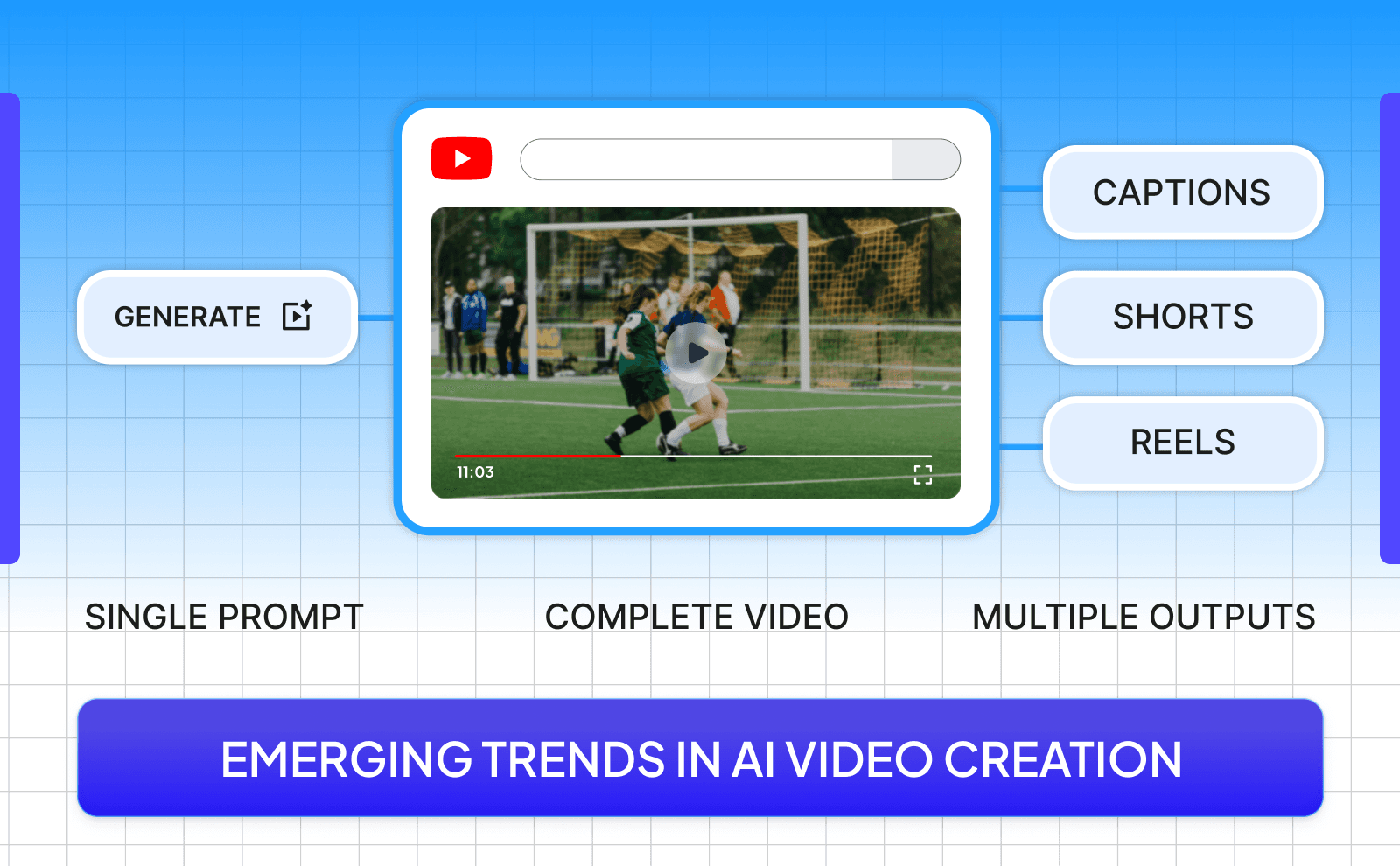
AI is moving toward full automation. You can already generate scripts, voices, visuals, and thumbnails from one prompt. The next step is smarter personalization. videos made specifically & automatically to different audiences.
Another big trend is real-time editing and instant repurposing. One long video can be automatically turned into multiple shorts, clips, and posts. The focus is on speed and volume without adding more manual work.
How Professional Creators Are Adapting
Professional creators aren’t fighting AI, they’re using it. Many use it for research, first drafts, and editing assistance. This frees up time to focus on higher-level strategies and creative work.
The ones who make it long term are those who learn the AI video creation tools early. They don’t see AI as competition, they don’t ask will AI replace video creators, they see it as leverage. And in a space that moves fast, leverage makes the whole difference.
Conclusion
At the end of the day, this isn’t a battle between humans and machines. It’s about using the right strengths at the right time. AI video creation tools are making content faster, cheaper, and easier to produce. What used to take a full team can now be done by one person with the right setup. That opens the door for true scalable video production, especially for new creators who want to grow without burning out.
But speed alone isn’t enough. Real connection still comes from human experience, emotion, and perspective. The smartest approach is combining creativity with AI automation in video production. Let the tools handle the heavy lifting, and keep the storytelling human. That balance is where the real advantage is, now and in the future.
Frequently Asked Questions
What Are The Main Advantages Of AI Video Creation Over Human Production?
AI video creation tools offer speed, lower costs, and the ability to produce large volumes of content quickly.
Can AI Replace Video Editors Completely?
Not completely. AI can handle technical tasks, but creative decisions and edits are still essential.
What Are The Biggest Limitations Of AI In Video Editing?
AI struggles with emotional depth, originality, and understanding subtle context or cultural nuance.
How Can Video Creators Effectively Combine AI Tools With Human Creativity?
Use AI for automation and repetitive tasks, then refine the final product with human storytelling and direction.
Will AI Replace Video Creators In The Future?
AI will change the role of creators, but full replacement is unlikely because audiences connect with real people.
What Tasks Should Always Remain With Human Video Creators?
Brand voice, emotional storytelling, creative direction, and sensitive messaging should stay human-led.
Which AI Video Creation Tools Are Best For Professional Creators?
The best tools are the ones that combine script writing, editing, voiceover, and thumbnails in one system for efficient scalable video production.
How Does AI Video Production Affect Content Quality And Authenticity?
AI automation in video production can improve efficiency, but authenticity depends on adding genuine human perspective.